
Dear Business Owner,
You are not here because you need another founder story.
Something about the commercial argument has made sense. Now you are checking the risk behind it.
Will the person who understood the problem still be there when the evidence gets messy?
Or will you sign, meet a new account manager and spend the next several months repeating the context that made the original plan sensible?
That is a fair question.
Here is the honest answer.
The handoff changes the work
The dangerous moment is not the introduction of a specialist.
It is the moment the plan survives after the evidence has changed.
When the person closest to the commercial problem disappears, every specialist can keep completing tasks while the wrong priority keeps moving.
The reports may still arrive. The work may still look busy. But nobody senior is asking whether the work still deserves your money.
You do not need one person to perform every task.
You do need somebody with enough context and authority to change course when one part of marketing exposes a problem somewhere else.
Senior access should change decisions
Founder access is not valuable because it feels important.
It is valuable when a paid campaign exposes a weak destination, more leads would overwhelm slow follow-up, or a search problem turns out to be an authority problem.
Those are commercial decisions before they are channel decisions.
The person making them needs to compare tradeoffs, challenge the original brief and say when the next dollar belongs somewhere else.
That is where Joel enters the story.
A relevant founder story
I am Joel House, founder of Xpand Digital.
My work began in search. Then client problems kept showing me why channel-only answers fail: traffic exposed weak pages, leads exposed slow follow-up and platform results meant very little when the commercial event was unclear.
That moved my work into paid media, conversion, automation and AI when the problem demanded it, not because every client needed every service.
I have written two books about marketing and practical AI, including AI for Revenue, and have published through Forbes Councils.
Those credentials do not prove what will happen in your business. They give you something more useful at this stage: a public body of thinking you can inspect before you put me near an important decision.
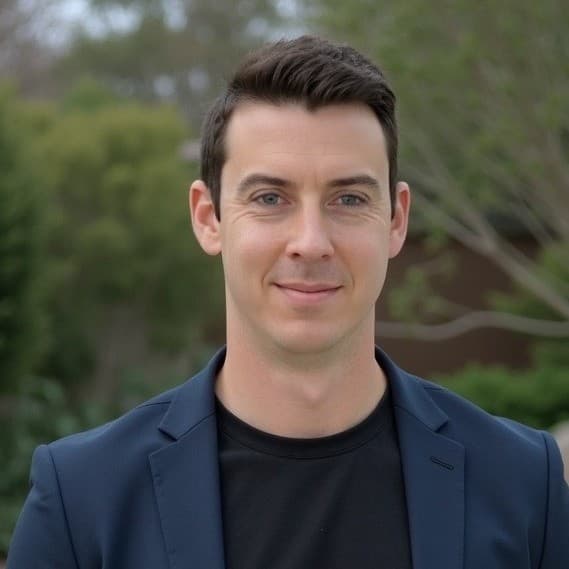
Founder, Xpand Digital
Hi. I’m Joel.
I stay close to the decisions that can redirect your work. My job is not to put my name on every task. It is to keep the commercial question from disappearing between specialists.
- Joel directly owns
- Diagnosis, priorities, architecture and decisions that cross responsibilities.
- Focused specialists may own
- Agreed execution where their depth is required.
- You can see
- Who has the next move, what evidence decides it and where responsibility ends.
Where Joel stays involved
I stay directly involved in diagnosis, priorities, decision design and evidence-led changes that can redirect the work.
That means I am involved when the problem is framed, when the evidence changes the priority and when a specialist's result creates a decision outside that specialist's lane.
It does not mean I personally write every ad, build every page, repair every tracking issue or execute every specialist task.
When specialist depth is needed, a focused specialist leads the agreed execution. My responsibility is to keep the reason for that work attached to the commercial decision.
That boundary protects you from both bad versions of “founder-led”: one person pretending to be expert in everything, and a founder disappearing while the name stays on the proposal.
What the client experiences
The working sequence is deliberately plain.
You bring the commercial problem and the available evidence, not a shopping list of channels. I help determine what deserves attention and what should stay untouched.
If specialist work is required, its owner and boundary should be clear. When the evidence crosses responsibilities or changes the priority, the decision comes back to me.
Before work moves, you should be able to answer:
- What is being changed, and why?
- What evidence will decide the next move?
- Who owns the execution?
- What remains with your team?
- Where does Xpand's responsibility end?
That is how the model reduces context loss without pretending every task needs founder hands.
Inspect The Thinking Before The Fit

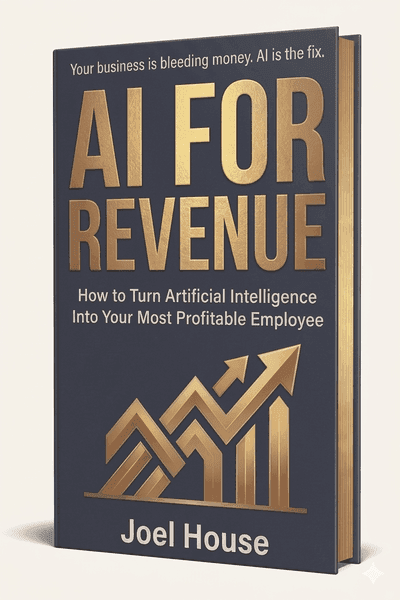
Selected publication links



Principles that protect your budget
A channel metric is evidence, not the finish line. A click, ranking, mention or lead matters only in the commercial context it is meant to serve.
More activity is not the default answer. Sometimes the responsible move is to repair, pause, measure or leave something alone.
Useful history should survive a change. Existing account learning and assets should not be discarded merely to make new work look dramatic.
Bad news should travel early. Changed evidence is a reason to revisit the plan, not hide behind it.
The right owner matters more than the whole scope. If your team or another specialist should own the move, that should be said plainly.
What Xpand refuses
Xpand will not prescribe a favourite tactic before looking at the problem.
It will not package every available service into an engagement merely because those services exist.
It will not call activity a commercial win when the important event cannot be seen.
It will not promise an outcome controlled by a platform, a market or your own fulfilment.
And it will not pretend a focused operator model is a large department.
The limits are part of the model
Founder-led is a strength only when scope and capacity are controlled.
Xpand is not a round-the-clock account desk, a deep management hierarchy or an unlimited production bench.
If your situation depends on those things, a larger organisation may be the better choice.
That is not a weakness hidden in the fine print. It is buyer protection.
You should know whether the delivery model fits before either side starts defending a bad match.
Mutual fit matters
This model fits an established business with a proven offer, useful evidence and leaders willing to examine the real constraint.
It fits a buyer who values direct challenge, visible ownership and specialist depth without layers of account management.
It does not fit someone who wants the founder's name without founder-level challenge, has already prescribed the tactic, needs every execution detail handled personally by Joel, or expects certainty nobody can responsibly provide.
You should be assessing Xpand. Xpand should also be assessing whether the problem is one it can responsibly own.
You should not need blind trust
An About page cannot prove a working relationship.
It can tell you what to test.
Did the problem become clearer? Were the boundaries explicit? Was the recommendation still useful when Xpand was not the obvious owner?
If the answer is yes, there may be a fit.
If the answer is no, you should walk away before a retainer makes the decision harder.
Bring the problem. Judge the thinking, the boundaries and the candour before you judge the pitch.
Joel House