The 9 Best Answer Engine Optimization Companies in 2026
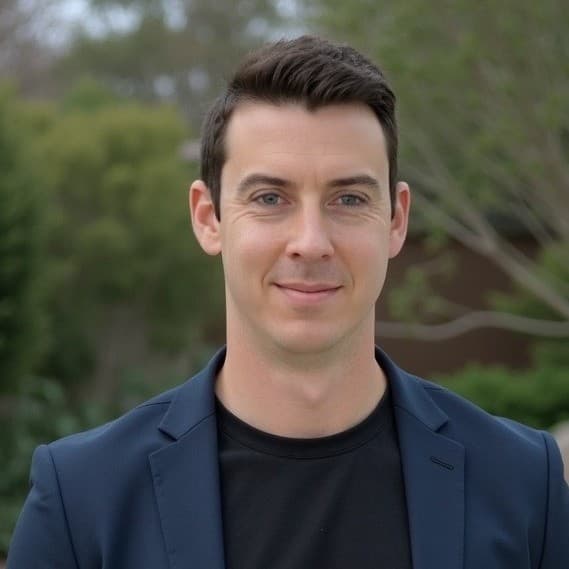
By Joel House·Author of two published books·Forbes Agency Council
Answer engine optimization is the work of getting your business named when someone asks ChatGPT, Perplexity, Gemini, or Google's AI Overviews a question instead of typing it into a search box. The answer engine reads the web, decides who to trust, and hands back one or two recommendations. There is no page two. If a model doesn't cite you, you don't exist for that buyer, and no amount of traditional ranking fixes that. So before you hire anyone off a list, including this one, know exactly what you're buying: a firm that can move what a model says about you, not one that renamed its SEO retainer.
The stakes aren't theoretical. Outrigger's April 2026 public AI visibility research measured 95,392 data points across 1,000 businesses and found 65.9% of them invisible in AI search: not ranked low, not mentioned at all. Two in three companies simply never come up when a model answers. The companies below are the ones I'd actually shortlist to fix that. I kept the AEO specialists and the credible enterprise shops that keep surfacing on these queries, and: this matters more: the ones that can show you a named method and an instrument rather than a content calendar with 'AI' stapled to it. I skipped the directories, the 'top 50' lead-resale farms, and anyone whose entire answer-engine pitch is 'we'll add FAQ schema.' Built the way I'd want it built if I were the one signing the check.
How this list is ranked
Rankings weigh three things: whether the firm has a real, named answer-engine methodology or instrument rather than a repackaged SEO program, demonstrated positioning on commercial AEO and AI-search terms in our July 2026 SERP pull, and fit clarity: how obvious it is which buyer each firm serves best. Two honest caveats. The category is young, so most public results are self-reported and worth verifying on a call before you sign. And a couple of these firms block automated review of their sites, so we leaned on their stable public positioning instead. No company paid to appear, and every external link points straight to the firm's own homepage so you can check the receipts yourself.
Full transparency
Xpand Digital appears first on a list published by Xpand Digital. That conflict is stated plainly. The remaining order follows the methodology above, and no agency paid to appear.
Los Angeles based · serving clients in the US and AustraliaOur agency: see note above
Best for · Businesses that want marketing tied to qualified demand and commercial decisions, not vanity metrics
Xpand Digital is led by Joel House, author of The Growth Architecture and AI for Revenue and a Forbes Agency Council contributor. The agency brings 15+ years of marketing experience across 300+ businesses and 40+ industries. Its work connects search visibility to qualified demand, clearer decisions and less wasted spend, with scope and measurement defined around each business.
Founder-led strategy, direct access to Joel, and a scope tied to the commercial constraint rather than a public package.
Best for · B2B companies that want thought-leadership content built to earn AI citations
The firm that has done the most to define this category. First Page Sage says it was the first agency to offer AEO, back in 2023, and it publishes a quarterly study on how answer engines choose sources: the kind of primary research most agencies only cite. Its model pairs a full SEO foundation with content engineered for the passages ChatGPT, Perplexity, Claude, and Gemini pull from, aimed squarely at lead generation rather than traffic vanity. It leans B2B across technology, healthcare, and professional services. A strong first call if your growth depends on being the cited authority in a considered, high-trust purchase.
Best for · Enterprise and mid-market brands that want the deep technical side of AI search handled
Led by Mike King, one of the most technical voices in search, iPullRank calls its approach 'relevance engineering': optimizing for how models actually work: query fan-out, passage retrieval, embeddings, and synthesis. This is the shop for teams that want the engineering underneath an AI answer explained and executed, not hand-waved. Its client roster runs to names like Target, Under Armour, and American Express, so the fit is larger organizations with real technical and content depth. If your problem is structural: how AI systems parse, retrieve, and trust your content at scale: this is a serious option. Enterprise pricing to match.
Best for · Funded startups and larger brands that want full-service AEO backed by a monitoring platform
A growth agency that runs answer engine optimization across four fronts: AI-visibility intelligence, owned-content optimization, earned media and digital PR, and technical infrastructure. It pairs the service with Goodie, an AEO platform that monitors brand presence across ChatGPT, Gemini, Claude, and Perplexity, so the reporting is tied to what models are actually saying. Its client work spans startups through Fortune 100 names like Nike and Intuit. A good fit for well-funded companies that want strategy, execution, and measurement under one roof rather than a specialist point solution. Expect an agency-scale engagement, not founder-led work.
Best for · Established B2B organizations that want AEO built on rigorous technical and entity work
A Chicago agency with more than 20 years in search that has extended cleanly into answer engine optimization. Its work centers on the unglamorous fundamentals that actually move citations: schema implementation, entity and fact-structure clarity, answer-first content, and monitoring across AI Overviews, Gemini, ChatGPT, Perplexity, and Copilot. It serves technology, financial services, manufacturing, and logistics: sectors where accuracy and trust signals carry weight. If you want a mature, process-driven partner that treats AEO as engineering rather than a trend, Marcel is a credible shortlist entry. Positioning is complementary to SEO, so expect both handled together.
Best for · Brands and personal brands with an entity or knowledge-graph problem AI keeps getting wrong
Founded by Jason Barnard, Kalicube is the specialist for one specific and increasingly common problem: AI misunderstanding who you are. Its focus is entity optimization: making sure knowledge graphs and language models represent your brand correctly rather than confusing you with a competitor. It runs Kalicube Pro, a platform built on a large proprietary dataset of brands, and a documented process for correcting how machines describe you. It serves both corporations and personal brands, and offers a fast AI audit across several platforms. Narrower than a full-service agency by design, but the right call when your core issue is misrepresentation, not absence.
Best for · SaaS and e-commerce brands that need content and digital PR built to become the answer
A content-led agency that has repositioned around what it calls being 'the answer' in AI search, using prompt and citation data to find where a brand is missing from AI results and then closing the gap with content, digital PR, and design. Its strength is production at quality and scale: the muscle to actually publish the answer-ready material AEO depends on. The client list leans SaaS and e-commerce, with names like HubSpot, Zapier, and On Running. A sensible pick when your bottleneck is content depth and earned links rather than deep technical repair. Larger-brand pricing and process.
Best for · B2B SaaS companies that want organic and AI-search growth tied to revenue and trials
An AI-search-first agency built specifically for tech and SaaS brands, folding generative engine and answer engine optimization into a broader organic-growth program that includes content, link building, and migrations. Its pitch is revenue over vanity metrics, pipeline and trials rather than impressions, which is the right frame for a subscription business. Because it is vertical by design, its playbook for SaaS buyer journeys and AI-answer visibility runs deeper than a generalist's. A strong fit if you are a software company that wants one partner accountable for both Google and the answer engines. Verify reported results on a call.
Best for · B2B, SaaS, and professional-services firms that want a structured, audited AEO roadmap
An Austin agency that has stood up a dedicated answer engine optimization practice rather than bolting AEO onto an existing menu. It works to get brands cited across ChatGPT, Perplexity, AI Overviews, Claude, Gemini, and Grok through a clear four-step arc: AI-visibility audit, strategy and roadmap, implementation, and ongoing management. That structure suits buyers who want to see the plan before the spend. Its client mix spans B2B, SaaS, e-commerce, and professional services. A measured, data-driven option for teams that value a documented process and defined milestones over a founder's intuition.
Questions buyers actually ask
What is answer engine optimization, and how is it different from SEO?+
SEO earns you a position on a results page a person still has to read. Answer engine optimization earns you a mention inside the answer a model gives: the recommendation ChatGPT, Perplexity, Gemini, or Google's AI Overviews hands back before anyone scrolls. The work overlaps (both reward clear, credible, well-structured content) but the target differs: AEO optimizes for being cited and named, not ranked. As more buyers ask a model instead of a search box, being the cited answer is quietly becoming the more valuable position.
How much do answer engine optimization companies charge in 2026?+
Pricing is still settling, but the bands are becoming clear. A light audit or entry program runs roughly $1,000 to $3,000 a month and is mostly diagnosis. Content-led AEO for a mid-market company typically lands between $4,000 and $10,000 a month. Serious, multi-surface work, technical repair, content, and earned-media citations together, runs $10,000 to $25,000-plus a month at the enterprise end. For most SMB and mid-market businesses, budget $2,500 to $6,000 a month for work that actually moves what models say about you.
How do I know an AEO company can actually move AI answers?+
Ask what they measure and what they own. A serious firm can show you a monitoring instrument that tracks your presence across ChatGPT, Perplexity, Gemini, and AI Overviews, and can point to a named method: not just 'we optimize your content.' Two in three businesses are invisible in AI search per Outrigger's April 2026 public research, so the honest baseline conversation starts with measuring where you stand today. If a company can't show you your current AI visibility before quoting a retainer, they're selling you a plan without a diagnosis.
Should I hire an AEO specialist or a full-service agency?+
It depends on the problem. If a model is actively getting your brand wrong, confusing you with a competitor or citing bad facts, a specialist like an entity-optimization shop is the faster fix. If you need content, technical work, and earned citations moving together, a full-service agency with real AEO depth will coordinate better than three vendors. Either way, the disqualifier is the same: skip anyone who added 'AI' to their homepage but can't describe how answer engines actually retrieve and trust sources.
Why does earning citations and digital PR matter so much for AEO?+
Answer engines don't just read your website: they weigh what independent, credible sources say about you across the web. That's why third-party citations carry so much weight: a model trusts a brand that reputable publications mention far more than one that only talks about itself. It's also why the strongest AEO companies pair on-site work with earned media. Xpand may use PressForge, a digital-PR workflow in final beta, to organize research, pitching, and follow-up. Editors decide what is published, and publication does not guarantee an AI citation.
How long does answer engine optimization take to show results?+
Faster than classic SEO in some ways, slower in others. Answer engines re-read the web continuously, so a fixed fact or a fresh citation can surface in weeks. But building the durable authority a model trusts, consistent entity signals, earned mentions, answer-ready content across your key questions, is a 90-day-plus effort, not a switch. Expect early movement on specific queries within the first month or two, and a clearer shift in how often you're named as coverage and citations compound over a quarter.
Do these companies optimize for ChatGPT, Perplexity, and Google AI Overviews all at once?+
The good ones do, because the underlying work travels. Clear structure, credible citations, accurate entity signals, and answer-ready content help you get named across every major model rather than one. Where they differ is emphasis: some firms weight Google AI Overviews (closer to traditional SEO), others focus on conversational engines like ChatGPT and Perplexity. Ask any company on your shortlist which surfaces they measure and prioritize, and make sure it matches where your buyers are actually asking their questions.