
Dear Business Owner,
You paid for a precise click. The ad named a problem, the search result matched the need and the buyer chose to continue.
Then the page greeted them with every service, every audience and every possible next step.
Now the buyer has to rebuild the promise you already paid to make.
The campaign did its job. The handoff did not.
A click arrives with an expectation
Every useful click carries context.
The buyer saw a specific problem, claim, product, audience, location, or reason to act. The first screen after the click should confirm that they are in the right place and that the promised next step still exists.
When the destination changes the language, broadens the offer, or leads with company information, the visitor has to do the matching work.
Some will keep looking.
Others will decide the page is not for them before they reach the proof that could have changed their mind.
The page does not need to say everything. It needs to continue the right thing.
Your homepage has a different job
A homepage introduces the business to people arriving with different questions. It may need several services, proof points, and routes.
A campaign page begins with more context.
It knows which promise earned the visit. That allows it to remove irrelevant choices, organise proof around one decision, and make one next step dominant.
This does not mean every campaign needs a new page. It means the destination should be as specific as the promise that sends people there.
If the homepage can create that continuity without compromising its wider job, keep it.
If it cannot, a focused destination may be the smaller and clearer move.
Focus means one decision
Focus is information in the order one buyer needs it.
The buyer determines the situation and language.
The offer gives that buyer a reason to act.
The proof makes the important claim safe enough to believe.
The action matches the buyer's readiness and the sales process.
The measurement tells the business whether the action represents useful demand.
Copy cannot carry a weak offer. Design cannot rescue irrelevant proof. Development cannot fix an undefined action. Tracking cannot make a poor-quality conversion commercially valuable.
The page works as one handoff only when those decisions support each other.
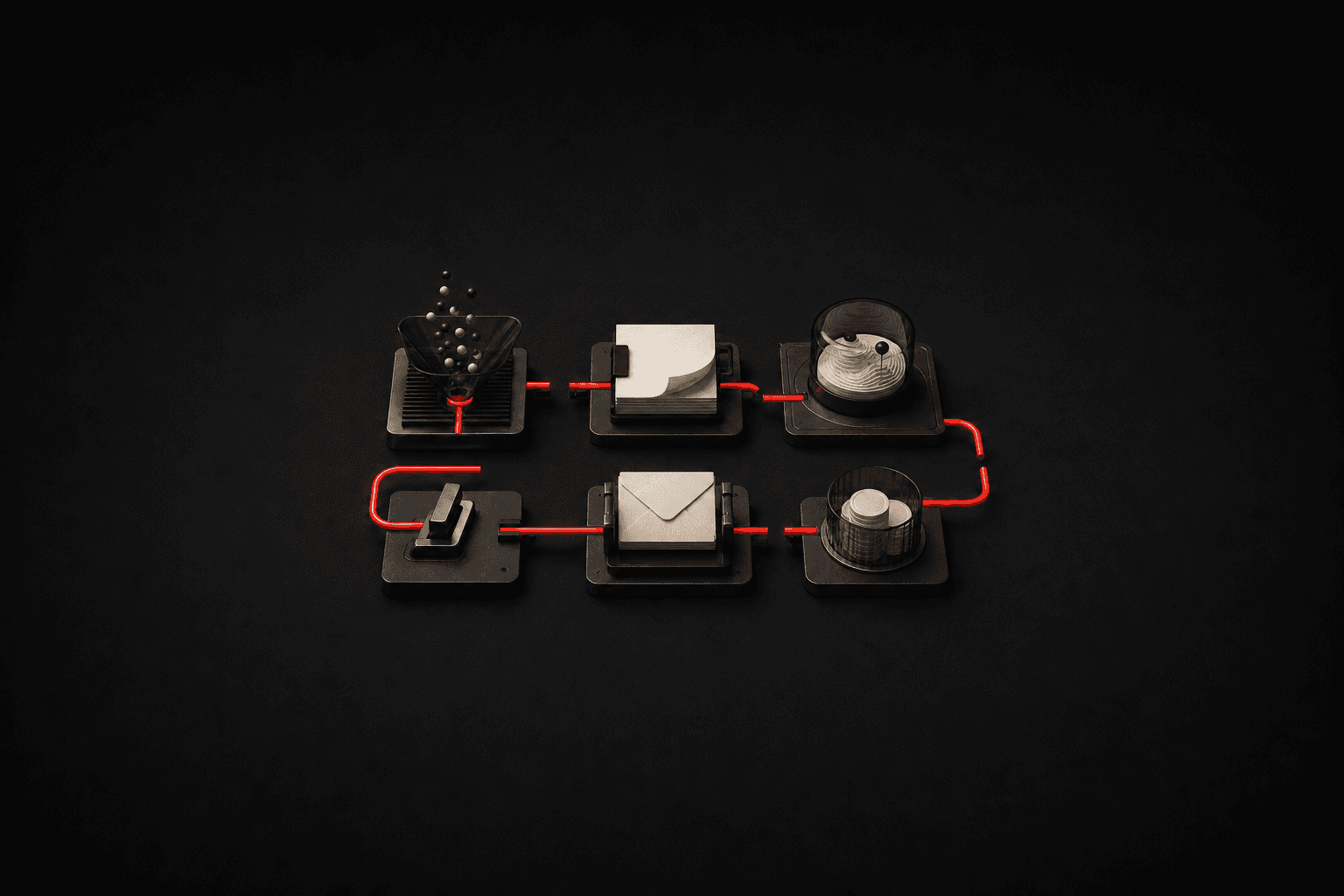
The post-click path
Keep The Promise Moving Forward
A focused destination continues the exact promise that earned attention and supports one measurable next step.
Promise
Carry the ad, query or campaign expectation into the first screen.
Relevance
Make the buyer, problem and offer unmistakable without a hunt.
Proof
Support the decision with evidence and risk handling that fit the claim.
Action and measure
Give the visitor one next step and record the event that matters.
Landing Pages is not CRO
A landing page is for a campaign that lacks a focused destination or needs its message-to-action handoff repaired.
CRO is for a stable, measurable path that needs repeated evidence-led learning.
One creates or repairs the destination; the other tests and improves an established path.
Choose which problem exists before turning a build into an experiment, or an experiment into a rebuild.
Decide before you build
Start by sharing one specific problem, the outcome that matters and the evidence you already have. Before any work is scoped, Xpand will tell you what else would need to be inspected and whether the issue appears to fit.
The immediate goal is a clear decision about what should stay, what deserves attention and who should own the next step. This initial conversation does not promise a report, a result or that Xpand is the right owner.
It could recommend a build, repair, test, campaign change, CRO route, or leaving the page alone.
“Will direct response damage the brand?”
Clarity is not a visual style.
A focused page can use the brand's real voice, design language, claims, and legal boundaries while still making the buyer's decision easier.
Brand should shape how the promise is expressed. It should not force the visitor to search for relevance or hide the next step.
The useful tension is not brand versus conversion. It is brand expression versus buyer confusion.
This page needs a real campaign
This route fits a proven offer, one priority buyer or campaign, a discernible promise, a defined conversion event, downstream quality evidence, freedom to change the message or action, and capacity to fulfil more qualified demand.
Several offers can share one page only when they serve the same buyer, continue the same promise, and lead to the same action. Otherwise the destination becomes a menu again.
Enough traffic for a build decision is not the same as enough traffic for a formal split test. Customer research, sales evidence, lead quality, and reliable measurement can still support a focused first move, but low volume limits certainty.
It is a poor fit for product-market-fit rescue, a visual redesign with no commercial question, an unstable offer, missing buyer evidence, or missing measurement access.
It is also a poor fit when several audiences are forced into one action, a fixed lift is required, or the problem clearly belongs to sales follow-up or fulfilment.
Here’s What Happens Next
Share the situation, the commercial outcome that matters and the evidence already available. If there is a useful fit, Xpand will explain what should be inspected before any work is proposed.
The immediate goal is a clear decision about what should stay, what deserves attention and who should own the next step. This initial conversation does not promise a report, a result or that Xpand is the right owner.
You decide whether to handle the next step internally, use another specialist, ask Xpand to scope it or leave it alone.
Give the click somewhere to continue
More traffic cannot make a generic promise specific, and a prettier page cannot repair a campaign-to-destination mismatch by itself.
Start with the promise that earned the click. Then decide whether the destination should be kept, repaired, tested, or replaced.